
 How to Play Cissy Strut on Harmonica
Hey, this is Tomlin from Tomlin Harmonica Lessons—and today I’m going to show you how to play Cissy Strut on harmonica. This is a super funky tune by The Meters and it’s one I get asked about all the time.
You’ll need a C harmonica and we’ll be playing in second position—which puts us in the key of G. Now, the original track is in the key of C, so if you want to play along with it directly, you’ll need to transfer everything I show you here to an F harmonica. But don’t worry about that for now—learn it on the C harp first, then make the switch when you’re ready.
Let’s break it down into two sections: the A section and the B section. These parts loop throughout the tune and create that iconic groove.
Click here to download resources
Harmonica Setup and Position
To keep things simple:
Use a C harmonica
Play in second position = key of G
The original tune is in C, so if you want to match the recording later, use an F harmonica
But for now, we’re learning it in G—it’s easier to start here and then transpose it.
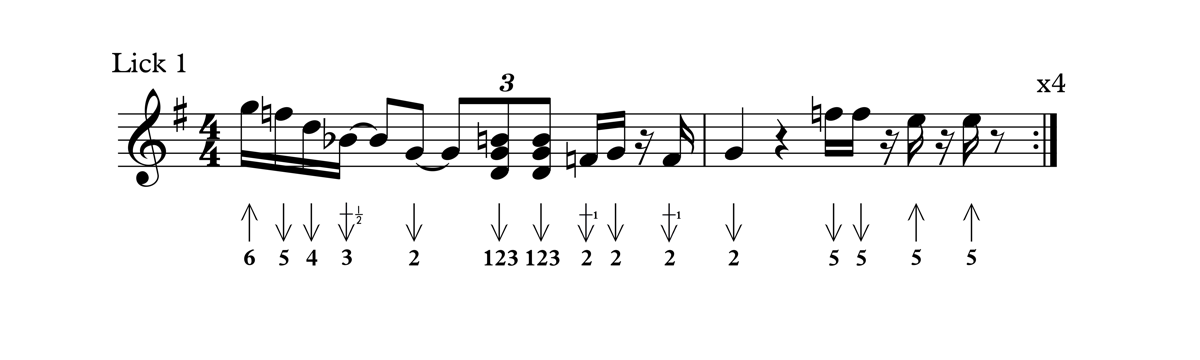
The A Section: First Funky Phrase
We’re going to break this section down into three little parts.
Part 1
You’ll start with a quick run of sixteenth notes:
6 blow → 5 draw → 4 draw → 3 draw half-step bend (hold it!) → 2 draw
Make sure you hold that 3 draw bend just a little longer than the rest—then hit the 2 draw clean.
Part 2
This bit starts just after beat 3:
2–1–2–3 draw chords—they’re quick little stabs. Then:
2 draw whole-step bend → immediately release to 2 draw clean
And yes—even though it’s not a repeated note—I recommend articulating that clean 2 draw. It just makes it pop.
Repeat that bend-to-clean 2 draw sequence again. So this section goes:
[Chords] → bend → clean → bend → clean
Try landing that final 2 draw right on beat 1 of the next bar.
Part 3
You’ll rest for a beat—then hit:
5 draw → 5 draw
Then a fun little rhythmic accent:
rest → 5 blow → rest → 5 blow
Don’t stress about counting the sixteenth-note rests—just feel the rhythm: da-da, da-da.
Now try putting the full A section together. Take it slow—loop it a few times. Get locked in with the groove.
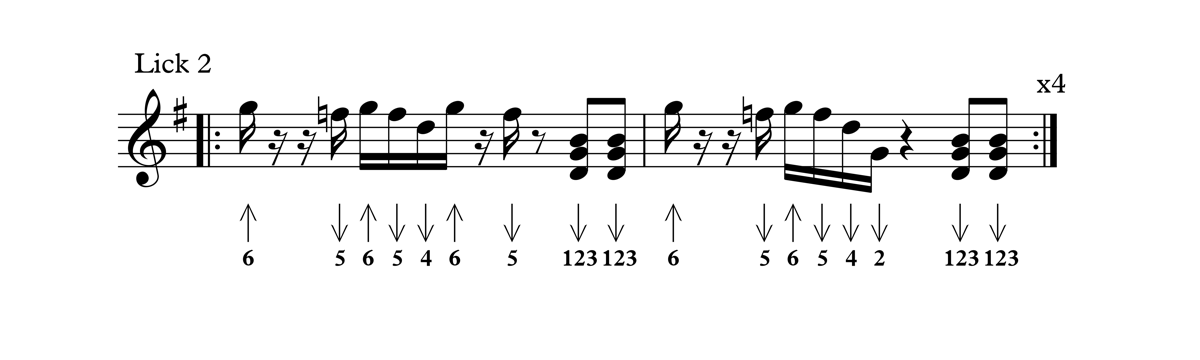
The B Section: Variation and Build
This second phrase keeps the feel but adds a few new tricks. Again—we’ll split it into two parts.
First Half
Starts with a 6 blow, then a short rest, then this sixteenth-note run:
5 draw → 6 blow → 5 draw → 4 draw → 6 blow → rest → 5 draw
Then we throw in a simple 1–2–3 draw chord stab to mimic the cymbal hit from the original recording. That rhythmic hit really helps it feel grounded.
Second Half
This starts the same as the first half:
6 blow → rest → quick 16ths
But now it ends:
…5 draw → 4 draw → 2 draw
Bit of a jump from 4 draw to 2 draw—but worth practicing! Then finish with the same chord hit on 1–2–3 draw.
Once you’ve got both halves, loop the full B section a few times—just like with the A section.
Putting It All Together: A Section x4, B Section x4
That’s the tune—seriously.
You play the A section four times—then the B section four times—and that whole sequence repeats as needed. During the full track, players take solos between repeats. When it’s time to bring the melody back, we call that the “head.”
Fun tip: on stage, musicians will literally tap their head to signal “let’s go back to the head.” So now you know.
Lick 1
Lick 2
Free Tab and Audio Clips
Want to practice with tabs and slow audio loops? I’ve put them together for you—just click the link, pop in your email, and I’ll send them over. Totally free.
Makes practicing a lot easier—and more fun too.
Call to Action
Give this one a go—and let me know in the comments how you get on. If you’re finding the bends a bit tough (especially that 2 draw or 3 draw), I’ve got a full lesson on bending notes on harmonica to help smooth that out.
And don’t forget to subscribe—new lesson every Wednesday at 5 p.m. UK time.
Happy harping!


